Wuthering Heights’ equation of admiration and love

One connection from the prior chapters of Wuthering heights we read preciously to the end of Wuthering Heights, which we read this week, is the consistent connection the women of the novel make between loving someone, and wanting to be like them. Early on in the novel, in Chapter 9, Catherine states she loves Edgar because, in her word, “he’s more myself than I am”. Later, towards the end of the novel, when the other Cathy finally confronts Heathcliff, she says, quite deliberately “I wouldn’t be you!” This sentence seems a direct reference to the previously mentioned line in chapter 9, as despite the fact that Cathy is not talking about personally loving Heathcliff, (like Catherine had been talking about Edgar), her comment is directly tied to the concept of love, as her comment is preceded by her statement that Heathcliff is loved by no one. This way Bronte continuously equates wanting to be someone (or wanting to be like someone), and loving that someone is rather disturbing, but also intriguing. It leaves me wondering, did Bronte simply see this as a healthy form of love, or is she trying to further integrate the idea that all of the romantic relationships in the novel are broken in some way ?

Health in Victorian England

As requested in class on Tuesday, we looked at a couple of articles focusing on health in Victorian England. As we know after reading Wuthering Heights, many people were dying off during this time period. In fact, almost all of the characters die within a short time period and at young ages: Mrs. Earnshaw, Mr. Earnshaw, Frances(18), Mr. and Mrs. Linton, Catherine(18), Hindley(27), Isabella(31), Edgar(39), Linton(17), and Heathcliff(37). Along with the rest of the class, we were wondering what caused all of these individuals to die so early in life. In an article we found called “Health and Hygiene in the Nineteenth Century” containing passages from Bruce Haley’s book called The Healthy Body and Victorian Culture, we found that there were three waves of contagious diseases circulating during the Victorian Era. The first epidemic was from 1831-1833 and was initiated by Cholera, a disease caused by eating food or water contaminated with bacteria which can lead to dehydration and death. It was referred to as “monstrous” because it was very frightening and affected so many people. Actually, it mainly affected the poorer neighborhoods because they were less likely to have sanitary food and water and they had drainage problems that flooded towns and lead to mold and fungi growth. As seen in “Grounding Miasma, or Anticipating the Germ Theory of Disease in Victorian Cholera Satire” by Wietske Smeele, people were skeptical of where the illness derived from. People believed in the miasma theory which is that illness is caused by foul air. A physician by the name of John Snow would be a pioneer in tracing the cause of cholera to contaminated water. The second epidemic from 1836-1842 was known as Typhus which was spread by lice, ticks, mites, and fleas during wars and famines. It had a high mortality rate and was just as rampant as smallpox. Finally, the last wave of epidemic was from 1842-1846. During this time frame, the railroads were starting to expand because of increased wage levels and better standard living. As a result, workers were moving into the cities and diseases often came along with them. The most common was Typhoid, which is basically Salmonella. As a result of this massive wave of illness, there was a myth that spread saying that one disease brought on another. As Jan Marsh states in “Health and Medicine in the 19th Century”, treatments for diseases in the early Victorian era often relied on coastal air, bleeding, leaching, laxatives and prayer. The popular belief was that in order to rid the body of a disease, the body had to be purified, and these were means of doing so. It wasn’t until the mid-19th century that doctors and scientists began recognizing the legitimate public health issues that factored into these diseases, and learned how to begin to treat them effectively. This was a turning point, and Europe began to see new scientific research and medical technological developments and the medical industry began growing faster than ever before. However, according to The Registrar General, life expectancy during the Victorian Era ranged from 15-45. This can be compared to the ages of the characters from Wuthering Heights and we can infer that the deaths of these individuals were most likely caused by one of the three aforementioned epidemics.

“Wuthering Heights” And Thomas Carlyle

I really enjoyed finishing the novel “Wuthering Heights”. I think a few themes I thought about it towards the ending are that revolving around love, wealth, and class. For example, Heathcliff treats Catherine horribly throughout the novel, but once she dies, he becomes of obsessed with her, and even talks to her ghost. Catherine, though, falls for Heraton before she dies even though he is not of the same class as Heathcliff. I found this interesting because Heathcliff feels so much better than everyone else throughout the novel, even though in the end, he doesn’t “get the girl”, but he does get the Grange, and that is much more important to him anyway.

Once the novel turns back to present and we as the reader are reminded of Lockwood being told this story, I began to wonder if Heathcliff felt guilty for the way he acted in his life. I feel as though Heathcliff’s honesty about his story would lead him feel sorrow for the way he treated people. Especially since in the end, although Heathcliff ends up with the grange, he is alone. This idea of thinking about materialism over love and happiness reminds me of the ideals of Thomas Carlyle. Carlyle writes that the obsession with class and wealth leads to the destruction of ones self, and I think this is something Healthcliff realizes as he enters his old age.

Cycle of Abuse

I really enjoyed reading the novel Wuthering Heights as I’ve never read something quite like it. While reading the last few chapters I couldn’t help but question a lot of the characters motives throughout the story. Heathcliff practically killed himself by not eating and it was all justified in the end because for years he had longed to be reunited with Catherine, his ‘one true love.’ However, many of Heathcliff’s and Catherine’s actions towards each other raise the question of whether or not they were truly mean to be together. It became more and more clear to me that the constant competition and jealous between Catherin and Heathcliff is not something that is healthy in a relationship. Although relationships require a lot of work and sacrifice, it seemed like neither of them were willing to risk it all to be together. Both Catherine and Heathcliff appear to be very self-centered characters and in a way you can say that they were made for each other in that regard. Being a woman myself I could help but feel that Heathcliff treats the women in his life quite terribly, especially Isabella. Even after he married her, all he could think about was being with Catherine and he was upset he couldn’t have her. This in particular made me think about the poem we read called “The Runaway Slave At Pilgrim’s Point” by Elizabeth Barret Browning. The poem is narrated by a female slave who had fled from her abuse and cruelty that she has endured. In the poem she talks about another slave she knew who she was in love with but was separated from him. This all reminds me of Isabella and Heathcliff and even a little bit about Heathcliff and Catherine. In Isabella’s case, she actually cared for Heathcliff in the beginning and hoped he would eventually grow to love her but instead he grew more hateful and bitter and treated her horribly which led her to escape his terrible treatment. In Catherine’s case, she loved Heathcliff and he loved her but Catherine chose Edgar which drove Heathcliff to seek revenge on Catherine by marrying Isabella, Edgar’s sister. In a way this could be seen as mental abuse by Heathcliff who wanted to see Catherine hurt by his decision to marry. I think there is a sort of cycle of abuse throughout this novel, and we even see it towards the end when Heathcliff refuses to eat and the starvation ultimately kills him. The characters in this novel not only treat each other poorly but they have no value for their own lives. It’s a sad conclusion to come to but at least at the end of the novel, with Heathcliff’s death, there might be a chance for their children to break the horrible cycle of abuse. 

Heathcliff and the chimney sweeper

One connection I made was between Wuthering Heights and The Chimney Sweeper was the parallel between Heathcliff and the chimney boy. Heathcliff and the young boy have many similarities. The boy in The Chimney Sweeper is described as a “black thing among the snow” who is crying and being asked where his parents are. We also see Heathcliff facing a similar situation, Heathcliff is an orphaned child defined by his skin color and seen as devilish. Both are rejected by their families and society. The line from The Chimney Sweeper “They clothed me in the clothes of death” describes how both characters are destined to a miserable life ultimately resulting in death. Neither character ever knows love and they are both forced to face life’s hardships alone starting at a young age. The line “Who make up a heaven of our misery” is similar to how Heathcliff tries to make his miserableness disappear by trying to force Catherine to love him to take away from his pain, even being buried next to her after his death. Both characters are seeking happiness and acceptance, unable to find either.  

Heathcliff as the Subject of “England 1819”

Wuthering Heights may end on a relatively hopeful note, but that does not erase how wholly heartbreaking the novel is. One of the most dismal aspects of the story being the way that Heathcliff becomes what he once hated: a tyrant, and one that seems to be far worse than Hindley. This structure, a depressing story with an ending that betrays the tone of the rest of it, reminds me of Shelley’s poem, “England 1819″. Not only that, but I cannot help but feel that Heathcliff, at the end of his life, can be described by the poem as well. Heathcliff is the country of England in which everything is going wrong. He is the ” old, mad, blind, despis’d, and dying king,” and yet, he is also that person “starv’d and stabb’d in the untill’d field.” Hate and suffering has made him into that hated and dying king, but a false king at that. It was a role that he never fit into, and really never wanted. So though he was the master of both Wuthering Heights and Thrushcross Grange at the time of his death, he died as the lonely orphan boy he once was. And yet out of all of this, that “glorious phantom may burst to illuminate our tempestuous day;” Hareton and Cathy go on to live what could have been between Catherine and Heathcliff, as Heathcliff is laid to rest, finally with the person he loves for the rest of eternity in “that quiet earth.”

Heathcliff is The Steam King

In the poem, “The Steam King” one passage in particular reminds me of Heathcliff’s decline and eventual death. “Those hells upon earth, since the Steam Kings birth / have scatter’d around despair; / For the human mind for heaven design’d, / With the body, is murdered there.” For Heathcliff, he has considered the moors hell on earth, ever since Catherine passed away. From the beginning, with their tumultuous relationship continually causing his high emotions, that regularly ended in despair. Also, at the end, he starts to refuse food, and spend his last days alone. Presumably, he was in a state of despair, but also like the third line his mind was designed for Heaven, which he considers to be Catherine. Although more indirectly, he does murder himself in a way. As he assures that Nelly knows his burial wishes, stops eating, and stays to himself, he lets himself die. Heathcliff’s happiness revolves solely around Catherine, and ever since her passing, he has lived in a deep sadness that spiraled continually. The last line of that stanza also specifies that the body has died, which is interesting because Catherine’s ghost is always looming, and after Heathcliff’s death, his is also spotted among the moors. 

The Illusion of Time

Something that has always fascinated me about Wuthering Heights is the strange, all-consuming cycle that rages across generations; wrecking one entirely and nearly destroying the second. This cycle’s presence within the narrative of Brontë’s novel is cemented by the repetition of names and the persisting antagonistic relationships between Earnshaws, Lintons, and Heathcliffs. Indeed, once Catherine dies, her role is filled by her daughter, Catherine, who bears the last name Linton, who, in turn, falls in “love” with Linton Heathcliff, himself more reminiscent of his given name rather than his surname. At the same time, an Earnshaw, Hareton, begins to pursue a Linton, Catherine. The actions of this second generation eerily parallel the destructive decisions made by their predecessors and create a suffocatingly cyclical narrative experience for readers of the novel. This perception of time, crafted by Brontë, is arguably a pessimistic one, for it seems to cede that despite the passage of time, nothing really ever changes. While Wuthering Heights appears to end with a glimmer of hope as Catherine and Hareton enter a seemingly stable relationship, a Linton is still paired with an Earnshaw, a recipe that the reader knows is ultimately one for disaster.

This cyclical and cynical view on time exists in conversation and in tension with Thomas Carlyle’s perception of time as is espoused in his work, “Natural Supernaturalism.” Carlyle first muses that time is an illusion, a stance that aligns with what Brontë seems to be arguing within her novel. Carlyle goes on to advocate for a more positive perception of time and urges his readers to “pierce through the Time-element” and “glance the Eternal.” He also proposes that despite distinctions between past and future they both “are” and are therefore a part of the present, a part of the “Everlasting NOW.” This idea is compatible with Brontë’s as her depiction of a relentless cycle that does not change, grow, or decline linearly also essentially collapses past, present, and future. However, the lens with which Carlyle views this collapse of time is far more positive, as he believes that this is the way in which his readers will be able to glance not only the Eternal but God, as well. Brontë, on the other hand, seems to condense time into one stagnant cycle in order to present her readers with some grim truth concerning human nature. Thus, while both Carlyle and Brontë are proponents of atypical and compressed perceptions of time, they each are capable of producing different sensations for their readers that are respectively optimistic and disillusioned.
“I have to remind myself to breathe — almost to remind my heart to beat!”: The Lovable Drama of the Romantic Revolution

So I’m going to use this opportunity in my blog post to perhaps make a connection to some outside of class research I’ve done (but don’t worry, it’s not completely tangential). Recently in my History of European Revolutions class, we’ve been discussing the Romantic Revolution and I’ve found it very useful in understanding the literary context of Wuthering Heights. When people express frustration at the lack of rational decision making and extremely dramatic, emotional characters, it’s important to realize that European art as a whole was undergoing deep structural change. The Romantic Revolution is more like a counter-revolution (at least in my eyes), where many artists expressed growing disillusionment with the purely rational ideas of the Enlightenment. The new scientific and mathematical discoveries may have “illuminated” the people of the world, but to many of those with more romantic dreams, these cold truths were not very comforting. As the author of The Romantic Revolution claims, “A universe in which God had been demoted to the role of primal clock maker seemed to be a chilly place,” (Blanning 170). Artists wanted some catharsis, they wanted mystery, they wanted romance, they wanted to feel. Heathcliff is the perfect example of a Romantic hero, not because he actually performs heroic deeds, but because his actions were deeply founded on whatever emotions he felt at the time. He feels anger, and decides to completely ruin Hindley’s life; he feels love, and is obsessed with Catherine for the rest of his life. The Romantic-era authors idealized characters like Heathcliff because they were “true” to themselves, and the whole tragic end/doomed romance of his character serves as the ultimate cherry on top of his moody sundae. I can go further into discussing how the Romantic Revolution relates to Wuthering Heights but I’ll refrain from doing so. This was mostly me testing the waters with a brief exploration of Emily Bronte’s literary contemporaries. Dr. Schacht can feel free to slap my wrist for going a bit against our goals

Children Robbed of Childhood

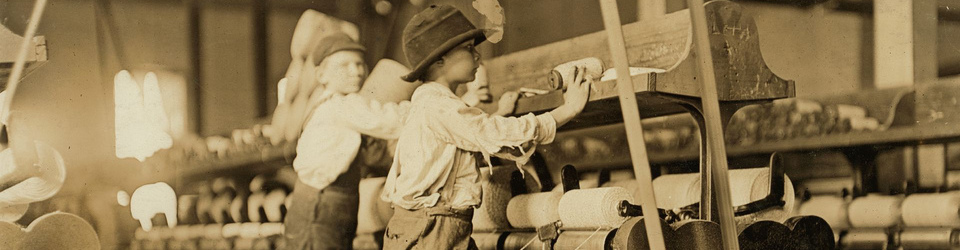
Upon finishing Emily Brontë’s Wuthering Heights, I thought of the poem “The Cry of the Children”, by Elizabeth Barrett Browning. Browning’s poem focuses on child labor, and the children she writes of are robbed of their childhood, not unlike the way Linton is robbed of his. These injustices are due to adult agendas with one selfish purpose. In terms of child labor, that agenda is, of course, rooted in exploitation and the drive to make money and be successful at any cost. In Linton’s case, Heathcliff is the adult with the agenda; he is hungry for revenge, and Linton suffers at his hands both directly and indirectly. In class, we discussed Browning’s metaphorical use of young animals and plants, perhaps with the intent of emphasizing the innocence of the children in the poem or with the intent of juxtaposing the seemingly more peaceful life of, for example, a young fawn with the corrupted one of a child forced into long work hours, missing out on their youth. I feel that Linton could fit into this poem as well as any troubled child, because everything about his existence seems to be miserable, right down to his poor health. Even Browning’s mention of “the country of the free” reminds us that, while Linton was technically free, he was so overwhelmingly controlled by Heathcliff, even in his temporary, superficial romance with young Catherine, that he was unable to make choices of his own volition; his life was dictated by other people. The very situation into which he was born was such a terrible one, messy and already full of complicated, jealous, and hateful relationships. Much like the poem’s children are slaves to the work that has been forced upon them, Linton is slave to his previously estranged father’s manipulations.