The Mistreatment of Women

As I read Wuthering Heights, the treatment of women at the time becomes very apparent. Mr. Heathcliff treats his daughter-in-law rudely and demands her to make tea for Mr. Lockwood, and she’s just expected to follow his commands. The narrator even observes that he said it in “bad nature.” Additionally, Mr. Lockwood walks in on Mr. Heathcliff yelling at her to do something instead of reading and insults her. As a result, she claims that she’ll put her trash away like he demanded because he can make her if she refuses, but she retorts back with her own comment; this exemplifies her defiance and willingness to stand up for herself. He put his hand up as if we was planning to hit her, but didn’t end up doing it. The way he treats her is totally unacceptable, but also not surprising given the time period.

The frustration within Catherine can be compared to Martineau in Society in America. Martineau writes of the mistreatment of women and how unfair a lot of the laws were at the time. For instance, in some states a woman had to yield all of her property to her husband. Martineau writes of how ridiculous it is that the government makes laws like these; women have never given their consent to these laws even though it is required, as stated in the Declaration of Independence. Both Martineau and Catherine demonstrate frustration to their place in society and defy who is trying to “put them in their place” in their own ways. Martineau writes to the public about it and advocates for change, while Catherine stands up for and defends herself against others.

The Struggles of Poor Victorian Children

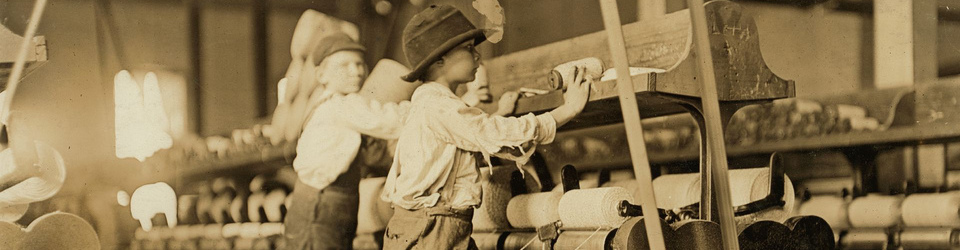
While reading Wuthering Heights, my heart ached for the child who was taken in by the Earnshaw’s. He was heavily mistreated by the family because of the way he looked and his position in society. As the evening approached, the family refused to allow the boy in their rooms even though he was alone and looking for a welcoming place to sleep. They referred to the boy as “it” and “put it on the landing of the stairs, hoping it might be gone on the morrow.” This shows that their hearts were cold towards the child, even though he was probably feeling vulnerable. In an attempt to find a place of comfort, the boy snuck into “Mr. Earnshaw’s room.” This action led him to get kicked out of their house. After his short stay with the family, he was alone and on the streets once again. The way they treated the boy was inhumane. Sadly, they probably did not see anything wrong with their actions because it was acceptable to treat people from different social classes badl. Unfortunately, this mentality was also apparent in The Chimney Sweeper.

The Chimney Sweeper represents how some lower-class children felt during the Victorian Era. They often had to work strenuous jobs just to survive. Even though they were so young and helpless, other citizens did not help them because they appeared to be happy. Sadly, they were left to fend for themselves, causing them to get clothed “in the clothes of death.” This meant that they were destined for a short lifespan. In a way, it also meant that they would never become successful because of their social standing. Just like the family in Wuthering Heights, the Victorian Era upper-class assumed that they had done the poor children no harm. However, this was far from the truth. The children were forced to fend for themselves and work at a young age. Had the upper class offered a helping hand to these children, they would not have had to face harmful work environments or worry about what the future held. The class divide during the Victorian Era was quite apparent and it cause the lower class to suffer immensely.

Image result for the chimney sweeper

Connections: Week of 9/9

As we discussed today in class, Martineau’s position on the “acquiescence” of women in Victorian society was that this acquiescence only observed because women of her time are essentially brainwashed into accepting their supposed inferiority at a young age. One thing I wanted to try to connect this to is Carlyle’s take on the “poor Black Woman”. Carlyle takes great pains to emphasize the generosity of this woman, who, out of the kindness of her heart, fed and sang to a sick white man. I can’t help but wonder if Martineau would find these acts of kindness and generosity to also be a sort of acquiescence. Would she say that the instinct to pity and help this white man was borne out of the same brainwashing and ignorance to oppression that she believes the women of her social class to have adopted? If not, what makes this situation so different?

connection to Carlyle

One thing I noticed was a parallel between Martineau and Carlyle’s writing. Both are trying to be the voice for the unrepresented, Martineau for the women and Carlyle for the working class. Both go on to discuss democracy and how though it may appear to work there are flaws that fail to give equality to all. The greedy and powerful people above the women and the working class make it seem impossible for them to ever get ahead. In Martineau’s writing, women are said to need protection from not only the government, but also their husbands and fathers much like the working class is in need of protection form the captains of industry. Both writers were leaning towards a form of political action and highlighting the need for change.

Connections with Martineau

After reading “Society in America” by Harriet Martineau, I noticed many similarities between her views on government and that of Carlyle’s. Although they stem from different layers, they both have very radical opinions about how government should be modified. For example, Carlyle believes government should always be changing with society, just as clothes do. This a radical idea for the time, since most do not have as strong opinions on government as he did. Carlyle also questioned many abstract concepts such as what the difference is between vanity and success, and Martineau questions abstract concepts too, but related to the role of women.
in “Society in America”, Martineau compares women to slaves in the sense that they have limited rights and are treated as property by men. This was a very radical view at the time of 1837. Martineau challenges the American government by acknowledging the fact that the government has the right to enslave women, even though democracy claims this is not allowed and morally wrong. Martineau argues that democracy fights for equal rights, yet America does not follow this idea themselves, even though it is the idea to which their government is built upon.
The connection I drew between Martineau and Carlyle is that in their literature they are both extremely radical and ahead of their time in their writing. Carlyle argues for a socialist government and Martineau argues for equal rights for women and calls out the American government.

“There is no beauty in the finest cloth if it makes hunger and unhappiness”

It is interesting to note that Martineau, much like Carlyle, uses the symbolism of clothes and livery to help establish their points about those with power and those without. Martineau mentions that the “kings of Europe” would have found it amusing to have commoners “without robes, crown, or sceptre, stepping into the throne of a strong nation” (Martineau ¶ 22). She also mentions how “images of women on wool-sacks” are used as if to mock how women express their power and interests. Clearly, while the textile industries were the industrial push that launched Britain into becoming a commercial powerhouse, the idea of them as connected to the actual state of the Empire was somewhat… shameful? It seems as though Carlyle’s clothes metaphor, where social order is like a suit that needs to be refitted every once in a while, extended beyond his own personal thoughts. Martineau’s mentioning of textiles is purely in a have/have not sense, where the royals have the robes crown and sceptre and the women have nothing but woolen sacks. Common clothes were shameful, fine clothes were a blessing.

9/9 Context Post

This week’s readings were particularly striking for me as they discussed the role of women in the Victorian era. The “political non-existence of women” is a series of statements outlining the sexism and mistreatment of women present in the early/mid-1800s–much of it blatantly demonstrated by law and government practices. The language in the piece is visceral and jarring. Women are referred to as property and slaves to their husbands or fathers and the entirety United States government. The text does a grand job of establishing problems present in the time period and setting the stage for a slow, eventual awakening of the nation of the great gender inequality. For my personal grounding in the time period, I want to be able to place these isolated pieces in a timeline. I’d like to see how men and women of the time reacted to this publication and what the general consensus of the public was: how did men continue to grip onto authority and did women exposed to these truths come to terms with their own mistreatment? In my mind, the progressive nature of this week’s readings feel well beyond their time; however, I want to know if this holds truth. Where does this time period fall into the fight for women’s rights and how long were and have people been socially aware of said injustices?

In reading Harriet Martineau’s Society in America, Vol. 1 and Thomas Carlyle’s Past and Present I have noticed a thematic similarity in their call for a truer implementation of Democracy. Despite focusing on different aspects of democracy, Carlyle talking about better treatment of the working class and Martineau about women having no political power, both authors’ identify flawed aspects of democracy that fail to foster equality. I found it interesting, however, how Carlyle’s piece was more defensive and appeared to be a suggestion for preemptive changes to keep working class people from rebelling as they did in France. Martineau on the other hand, as a feminist advocating for women’s rights is more in tune with the community she is advocating for. These gender and class differences between the two attributes to the tone of both works. For example, Carlyle being a member of the socially elite, advocating for working class peoples out of fear of sociopolitical disruption, emphasizes his perceived superiority.  

            I also found it interesting how in both pieces, comparisons to black people were made to further their arguments. Carlyle used a kind act of an African woman to illuminate how truly horrid the “captains of industry” were by suggesting the lowest of the low, a black woman, was better than them. Martineau takes a different approach by likening the lack of women’s rights to slavery. She writes, “It inspires the same emotions of pity as the supplication of the freed slave who kneels to his master to restore him to slavery, that he may have his animal wants supplied, without being troubled with human rights and duties.” This line is used to exemplify the sentiments on why women shouldn’t have power from a patriarchal standpoint. I find it interesting that despite her constant repetition of how it is unjust to implement laws without the consent of the governed when that’s precisely what slavery is and there’s no demand for that to end. There is very little intersectionality of issues in both pieces.

The Mental Health of Women over time

After reading Ada Lovelace’s letters and Harriet Martineau’s Society in America, it got me thinking about what we have read in John Stuart Mill’s Autobiography and Thomas Carlyle’s Sartor Resartus-The Everlasting No. Lovelace describes in her letters her ambition to further her studies in math and science. At this time, it was unheard of for most men to be literate and be educated, so the fact that she was able to study these subjects and write letters in order to gain more information was astounding. On the other hand, Martineau talks about how controlling the government was over women during this time period and how limited they were in their lives. She states “The interests of women who have fathers and husbands can never be identical with theirs”. This proves that women were subordinate to men at this time and weren’t taken seriously. In Mill”s Autobiography, he talks about the grief and difficulty he experienced in his life. Back then, it was rare to discuss this sort of mental health self awareness. On the contrary, Carlyle’s Sartor Resartus resembles the opposite and more positive side of mental health where he explains how man “has no other possession but Hope”. I’m wondering how women coped with this inequality at the time. Were they used to their role in society and therefore became complacent? Or did they fight back like Lovelace and Martineau by educating themselves and hoping for a better future for women?

Carlyle, Martineau, and Eliot: The Importance of Organization


In her discussion of the role of government and its influence on women, Harriet Martineau makes the assertion that the governments of the United States have the power to enslave certain women and seize their property all “without the consent of the governed” (Martineau, paragraph 4). Mary Wollstonecraft also comments on this notion that women are slaves in Rights of Women, where she explains “When, therefore, I call women slaves, I mean in a political and civil sense” (Eliot, paragraph 10). The lack of political representation for women (specifically white women) reduced them to the slaves of their oppressors (white men; husbands and fathers). During this time period, women did not exist as citizens and therefore did not reap the benefits of citizenship. Women were barred from leaving the domestic sphere and had limited exposure to public life. Martineau goes on to question how “obedience to the laws can be required of women, when no woman has, either actually or virtually, given any assent to any law” (Martineau, paragraph 6). This expectation that women ought to obey the laws of land regardless of their agreement with or approval of the law reminds me of Thomas Carlyle’s assertion in “Captains of Industry” that “all human interests, combined human endeavours, and social growths in this world, have, at a certain stage of their development, required organising: and Work, the grandest of human interests, does now require it” (Carlyle, paragraph 10).

I thought it was interesting to see how this concept of organization connects to the strife shared by women who yearned for political representation. Whether it be Martineau organizing and compiling her observations of American society and the role of women within a limited government or George Eliot organizing and constructing her essay that bridges the ideas of Mary Wollstonecraft and Margaret Fuller, in an attempt to remove the unjust laws that restricted women from benefiting from the advantages that were solely available to men.