Pip’s Happiness As A Gentleman

Pip’s journey toward becoming a gentleman is starting to remind me of John Stuart Mill’s Autobiography about happiness.

In paragraph 2 Mill talks about how he had set his whole life and happiness around a distant idea, but suddenly one day he realized that it wouldn’t bring him great happiness because he wasn’t happy in the present. He asked himself, “Suppose that all your objects in life were realized; that all the changes in institutions and opinions which you are looking forward to, could be completely effected at this very instant: would this be a great joy and happiness to you?” He then describes his reaction to this by saying, “And an irrepressible self-consciousness distinctly answered, “No!” At this my heart sank within me: the whole foundation on which my life was constructed fell down. All my happiness was to have been found in the continual pursuit of this end”.

I’m starting to see this in Pip’s character as he is reflecting on his past. Pip has constructed his life around the idea of becoming a gentleman and marrying Estella, making it seem as though that will bring him great happiness in life and it’s the end goal for him, but as he is slowly realizing, he’s missing out on many things in life during this process and we as readers really start to see this turn when he finds out that it was not Miss Havisham who was his benefactor, but the convict, Magwitch.

When he tells Estella that he loves her to find out that she is marrying Drummle is a pivotal point for Pip as marrying her was in Pip’s end plan for the future/happiness. Estella tells him that he’ll forget him in a week and Pip replies by saying, “Out of my thoughts! You are part of my existence, part of myself” showing that he built his life around her.

Pip is realizing that he isn’t getting any happiness/gratification out of the present. He has realized how terrible he has treated people who truly care about him like Joe and Biddy and he even admits to Miss Havisham that he wished he had never left the village he came from.

It’s also interesting with drawing comparisons between Mill and Pip in that they are both writing/narrating reflectively of their transformations so it makes me wonder how Pip’s story will end. Will he return back to Joe and Biddy?

Revenge Is Not so Sweet

Both Miss Havisham from Great Expectations and Heathcliff from Wuthering Heights conspire their own plans for revenge on certain people in their lives because of their past traumas. Heathcliff plans to take revenge on numerous characters; he takes revenge on Catherine for causing him pain with choosing Edgar over him and decides to marry Isabella to cause her pain. Additionally, he uses Hareton for revenge by treating him just as badly as Hindley treated him. In comparison, Miss. Havisham plans for revenge on all men because of her being stood up at the alter by a man was never planning to marry her and broke her heart. Instead of carrying out her means of revenge herself, she does it through Estella by conditioning her to be heartless and cold in order to break men’s hearts like Pip. Both these tales of revenge don’t end with justice for the characters who are using revenge as a means to cope with their traumas; simply, the revenge plans they have just end in more heartache and disappointment with no real winners in the end. Eventually, Heathcliff gives up with his plan and decides to stop eating to end up slowly killing himself. Conversely, Miss Havisham thought she would feel more satisfied with breaking Pip’s heart and taunting him with Estella, but eventually just feels pity for him and repeats, “what have I done!” over and over agin. Thus, she doesn’t feel as accomplished with her plan as she thought. Henceforth, revenge doesn’t work out well in the end for these characters and reflects the idea that while revenge may seem like a just method to deal with bad experiences, it just ends with more disappointment, heartache, and regret.

The Relationship Between Social Ranking and Love

While reading Great Expectations, Pip’s concern with his social standing stood out to me because he decided that he could not love Estella and have a high social ranking. In chapter 43, Pip asks himself “why should I loiter on my road, to compare the state of mind in which I had tried to rid myself of the stain of the prison before meeting her at the coach-office, with the state of mind in which I now reflected on the abyss between Estella in her pride and beauty, and the returned transport whom I harbored?” It seems as though Pip feels like he was a different person when he first met Estella. After his social standing changed, it’s as if he felt like he couldn’t love Estella the way he did when they first met. In my opinion, he felt the need to permanently leave Estella to protect her from the harsh reality of people’s great expectations. The idea of social standing and relationships being unable to coexist instantly reminded me of Catherine and Heathcliff’s relationship in Wuthering Heights.

In Wuthering Heights, Catherine feels a deep connection to Heathcliff, but her social standing initially causes her to feel like she cannot be with him. She blatantly states that “it would degrade me to marry Heathcliff.” (chapter 9) Her ranking in society was so important to her that she did not want to tarnish it by marrying someone who was not equal to her. The only reason she married Edgar was that they were equals. Even though he was a kind man, Catherine did not love him the way she loved Heathcliff. Although Catherine eventually ended up with Heathcliff, it was hard for her to come to terms with risking her social ranking. It is interesting to see how many people in the Victorian Era valued society’s perception of them more than true love.

The Hands of Great Expectations

In his article, “Handling the Perceptual Politics of Identity in Great Expectations,” Peter J Capuano takes notice of all the numerous hand-related references throughout Charles Dickens’ novel, Great Expectations. For example, Capuano points out that there are over 450 references to hands, both literally and figuratively, throughout the novel, and that these references create distinctions between characters and their relationship with identity politics. Capuano even goes as far to suggest that Dickens’ manipulates anatomy throughout the use of discourse to convey the pivotal development of Pip, Mrs. Joe, Miss Havisham, Joe, and Estella. One of the first claims Capuano makes about Dickens’ manipulation of anatomy is seen when Herbert calls Pip “Handel,” in his attempt to further elevate Pip’s reputation in bourgeois society. In addition, Capuano asserts that the hands of the aforementioned characters are indicative of their social class and position in society. For example, Capuano takes notice of the depiction of the female gesture at Satis House and the ways in which it works simultaneously as a combination of verbal and manual direction. We see this in Pip’s first interaction with Miss Havisham when he takes notice of the bright jewels displayed on her hands that display rich attributes and her bourgeois appearance. This shows Miss Havisham’s social class being portrayed by Dickens gestural use of hands. Furthermore, Dickens discusses the impatient movement of Miss Havisham’s fingers on her right hand when she commands Pip to play. This is indicative of the manual direction and her identity within aristocratic position in society that Capuano describes in his article. Capuano then brings up the idea of a Darwinian model of character development through Pip’s character while simultaneously adding to his notion of the portrayal of hands signifying his social, economical and even emotional values. In his transition from lower to upper class, we see Pip’s identity described through the use of his hands as “course” in Joe’s forge to “bejeweled” in London, which further represents his development as a bildungsroman character. Ultimately, Capuano establishes the interconnected ways Dickens use of hand imagery depicts societal and moral identities within the novel. 

Chapter 26:¶ 19  (talk of Molly’s wrist)

Chapter 8: ¶ 32, ¶ 50 (Miss Havisham)

Chapter 39: ¶ 70 – (Pips recoiled hands) 

Powerful Women in Great Expectations

After reading the final chapters of “Great Expectations”, I found many connections again between this novel and “Wuthering Heights”. Part of this is I think the time period they were written. Since both novels are from the Victorian Era, they both show signs of inequality, gender roles, and class statuses. My first post on “Great Expectations” was comparing Pip’s older sister to Catharine. After finishing the novel, I can also compare Catharine to Ms.Havisham, and Ms.Havisham to Pip’s older sister. All of these women are extremely confident and powerful in a certain sense. They are powerful in the way they manipulate men and others to get what they want, which is arguable the only way a woman could have any power in the Victorian Era.

Havisham and Heathcliff – The Spurned Lovers

After reading of Miss Havisham’s woeful backstory, I cannot help but be reminded of the other major relationship we’ve seen in a Victorian novel: that of Heathcliff and Cathy’s in Wuthering Heights. Havisham I find to be some sort of odd combination of mostly Heathcliff and Cathy as a character. As I noted in my blog post comment for Tuesday’s readings, Herbert notes that Havisham is like a Tartar – a racial minority. Similarly, Lockwood refers to Heathcliff as a “dark-skinned gipsy” in Chapter 1 of Wuthering Heights, and at several other points by others. Perhaps Havisham appears to be a normal, white English woman in appearance, but to the members of well-to-do English society, they are perceived in a similar light: as social others. Like Heathcliff, Havisham was spurned by a prospective lover, and left to simmer and fester in her own hate and apprehension. Both decided to concoct an elaborate plan to have their revenge (Heathcliff by taking ownership of both the estates, thereby wresting control of the entities used to harm him; Havisham by targeting men in general through plucking them out and deliberately trying to break their hearts like her’s was). Both are wealthy, with Heathcliff having acquired his wealth through manipulating Hindley and Havisham presumably having been born rich. Also, to bring in a comparison to Cathy, Havisham fell in love with a man of a lower social class — though unlike Cathy, seemingly she was unconcerned with how she was perceived by the populace as a whole.

To what purpose do I bring up these comparisons, however? Sure it’s neat that there are parallels between the characters, but how does this tie into any further motifs established by either novel? Well, from Wuthering Heights we can read intense class critiques from Bronte. None of the unfortunate happenings of the novel would have happened if not for social pressures influencing the characters into acting against their own self interest. Heathcliff essentially becomes the very sort of person he despised in his path to destroy them. Perhaps we will see a more gendered commentary from Dickens regarding Havisham’s position, and of how women were more susceptible to the whims of men. Is Havisham perhaps a proto-feminist character? I’m interested to see how Havisham and Heathcliff’s paths diverge or remain the same as we continue reading.

Pip and Heathcliff: Men Who Will Do Anything for the Woman They Love

In chapter 22 of Great Expectations, Pip asks Herbert teach him how to be a proper gentlemen. Pip is desperate to impress Estella, even though the two had always played together and enjoy each other’s company, Estella has always looked down on Pip.  This reminded me of Heathcliff and Catherine’s story in Wuthering Heights. When Catherine and Heathcliff were young, they would often play together and loved being together but ultimately when faced with the decision to marry Heathcliff or Edgar Linton, Catherine chooses Edgar. She feels as though by marrying Edgar he will be able to help her more, both financially and socially. This is what ultimately pushes Heathcliff to leave home and become the gentleman that Catherine is looking for to show her he can change. In Pip’s case, he is aware of his low social status and hopes that by educating himself on becoming a proper gentleman, he will be able to make Estella love him. Both Heathcliff and Pip want to change who they are for love but that’s not always a good thing. People should love you for who you are, and if they can’t then that doesn’t mean you should change to fit someone’s ‘ideal’ image. Personally, I think Heathcliff and Pip are very similar in the fact that they are really struggling with who they are and who they want to be. For both these men, it’s easy to change themselves into a different person for a woman. 

Time Cannot Heal A Broken Heart: As Exemplified Through Heathcliff, Tennyson, and Miss Havisham

There’s a common saying that almost everyone hears at some point in their life and it goes like this: “Only time can heal a broken heart.” Based on the texts we have read so far, like Emily Bronte’s Wuthering Heights, Alfred Tennyson’s In Memoriam or Charles Dickens’ Great Expectations, this cliche is continuously proven wrong. Time cannot, in fact, heal a broken heart. Initially we see this with Heathcliff’s erratic behaviour and his obsession to be reunited with Catherine I. His pain is evident in his infamous plea when he learns of Catherine’s death: “Be with me always—take any form—drive me mad! only do not leave me in this abyss, where I cannot find you!  Oh, God! it is unutterable! I cannot live without my life!  I cannot live without my soul!” (XVI). Heathcliff lives the remainder of his life in hopes of this reunion, because as Tennyson eloquently puts it: “More years had made me love thee more” (82.8).  I personally appreciated reading Wuthering Heights and then In Memoriam prior to Great Expectations because it enables me to empathise with Miss Havisham and her heartbreak. Like Heathcliff and Tennyson, Miss Havisham also ruminates in her grief as time passes by. While Heathcliff yearns for Catherine eighteen years after her death, and Tennyson, takes seventeen years to complete his tribute to Hallam, Miss Havisham exceeds almost twenty-five years of living in remorse. Her heartbreak and grief makes it seem as though the world around her has stopped moving, and all that she ever loved and cared for is placed out of her reach. Miss Havisham adopts the same coping mechanism as Heathcliff, and also resorts to revenge. While it may not seem directed on one particular person or family, she wants men to feel her to feel her pain, she wants their hearts to break, and uses Estella to carry out her revenge. In both Heathcliff and Miss Havisham’s grief, they become bitter and vengeful because they have spent all their time obsessing over their pain. Therefore it’s safe to assume that based on their circumstances, time does not heal the emotional wounds of Miss Havisham, Heathcliff, or Tennyson but rather, consumes their every thought and serves as an obsession to see who can hold onto their pain, and lost loved ones, the longest.

Group 5 context: On Dickens

Much like Pip, Charles Dickens led a life that closely resembled the narrative of ‘rags to riches.’ However, unlike Pip, Dickens was raised by his two birth parents, and led a life of relative gentility. This gentility was sporadic though because Dickens’ father led a life far beyond the means of the family and was thrown into debtor’s jail. Dickens’ witnessing his father being jailed marked a major turn in his life as he was taken out of school and thrust into a London comprised of long and laborious days in the factory, with his free time spent wandering the streets. Regarding Dickens’ rise as a social critic, this is of great importance, but it also figures heavily in the charity work that Dickens would take up once he gained eminence as an author. Herein comes Arlene Bowers Andrews article, “Charles Dickens, Social Worker in His Time,” which notes that Dickens devoted ten years of his time to help create and operate a transition home for impoverished and abused women. This is all to add depth to Dickens as not just an author who wrote on the social issues of the time, but as an activist and practitioner against the ills he saw apparent in Victorian society. He was supported over 43 different charity organizations, among which were the Poor Man’s Guardian Society, and the Metropolitan Sanitary Organization. Dickens sympathized so greatly with the lower class that his book Oliver Twist was actually written as a response to a particularly nasty piece of legislation known as the New Poor Law, which was an attempt by the Parliament to reduce the cost of looking after the poor and take beggars off the streets by commissioning workhouses where poor men, women, and children would work under harsh conditions for many hours a day in order to receive the benefits and help offered by the poor law, like housing, schooling, and food. No able-bodied person who did not work in a workhouse could receive any of the aforementioned benefits. Dickens was so disgusted by this, that he wrote Oliver Twist to show the plight of an innocent child raised in the conditions of the workhouse, where no fault could be attributed to Oliver in any way to justify the neglect, mistreatment, and starvation that he and some of the other boys in the book endure.

Life in the Victorian Ere

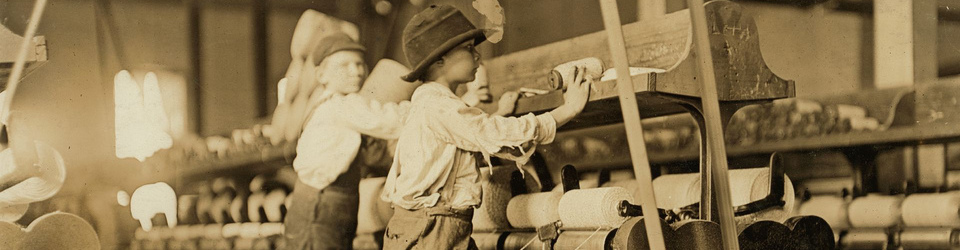
After reading chapters 20-29 of Great Expectations this week, it reminded me of our class discussions and research on England during this time period. The short poems England in 1819 and The Chimney Sweeper and Wuthering Heights gave us insight on the setting of house and work life during the Victorian Era. Cities were over crowded and diseases were spreading like wild fire. Dickens talks about how displeased Pip was when Jaggers takes him to London because of the stench and crowds. He mentions “an exceedingly dirty and partially drunk minister of justiceI” and says “this was horrible, and gave me a sickening idea of London”. I have a hard enough time visiting New York City in today’s age, I can’t imagine what it was like at this time.