Monthly Archives: October 2019

An Orphanage of compassion

Looking at Chapters 1-3 of Great Expectations, we can see some similar alignments with Heathcliff in Wuthering Heights and P[hil]ip, the main character in Great Expectations, Pip, as he calls himself due to not being able to pronounce neither his first nad last name, is recounting a tale of his childhood during Christmas time when he encounters a convict. In my perspective, I can see how these two characters, both Pip and Heathcliff, have a similar childhood background. We find out that Pip is an orphan who lives with his sister and her husband, a blacksmith, and Heathcliff was a homeless Gypsy living on the streets, adopted by a wealthy family on Mr. Earnshaw’s behalf. Pip had been threatened to help a convict and with compassion, he helped the man recover a bit when he returned. Heathcliff, although adopted by Mr.Earnshaw, was not treated fairly and kind by all members of his family. In fact, he was abused in more ways than one. He did not lash out until his adulthood, meaning he was a pushover, just as Pip was when this convict bullied and threatened him into doing something for his own benefit. Something I thought about by analyzing these two characters is, does living with strangers or guardians who aren’t your biological parents affect the way you are brought up or does that align with the experiences created from your childhood?

A Difference in Narrations

The novel Frankenstein by Mary Shelley was written a little before before the Victorian period in the 1810s, but it displays potent examples of unreliable and manipulated narration. The original version of the tale was the draft of the letter written by the captain to his sister. But, Victor Frankenstein towards the end is noted to have edited it, which erased the captain’s original perspective, and biased the novel to favor Victor’s narrative and presumably increasing the written hostility towards the monster. This is an obvious example of the loss of other perspectives, a “could have been,” or insights withheld from the reader. In Wuthering Heights, written in the 1840s, the narrators are primarily Lockwood and Nelly, with Isabella Linton as a arguable third narrator, while the main characters focused upon are Heathcliff, the Catherines, and the Lintons. In Wuthering Heights, there is a lack in the “true” perspectives of Heathcliff and Catherine for the details are biased by Nelly and Lockwood telling their points of view, much like how Victor Frankenstein wrote over the captain’s perspective. In Great Expectations, written in the 1860s, the main character and the narrator is one and the same: Pip. This first person narration, seems a bit more modern-YA-novel-protagonist, since the perspective of only one character is conveyed. What seems to be lacking in Great Expectations (so far) is those other “true” perspectives of characters such as: Joe, Mrs. Joe (which I might add, there has been no obvious notation of her own name), Estella, Miss Havisham, and other prominent characters. The machinations concealed in their minds, the reader will only be able to discover when Pip notices or through details he may note but not recognize. Both Frankenstein and Wuthering Heights utilize the manipulation and omission of the main characters “true” perspectives –the loss of Heathcliff’s, Catherine’s, and the monster’s perspectives– while Great Expectations, is utilizing the more familiar (dare I say modern) first-person-and-protagonist sole narrator. Is this indicating a post-1850s shift of the narration style in novels? Or perhaps, am I, the reader, biased and picking up on a false pattern created by the few novels I have read?

Dust and Time in “In Memoriam” and “Great Expectations”

While reading the beginning of Charles Dickens’ Great Expectations, I experienced a fair amount of anticipation with regards to meeting the infamously eccentric character, Miss Havisham. I knew that Miss Havisham would be dressed in her signature yellowed, grandiose gown since, when I was younger, my grandmother gave my brother a copy of Great Expectations that portrayed Miss Havisham and her interesting choice of dress on the cover. Indeed, when Pip first meets the iconic woman, he is confounded by her appearance and by the state in which the room she occupies is in. According to Pip, Miss Havisham is clad in all “satins, and lace, and silks” (Dickens 18) with white shoes, a fine assortment of jewels, a veil, and wears flowers in her hair. However, Pip also observes that all of these fine objects have either faded to yellow or have withered, as is the case with the flowers in Miss Havisham’s hair and Miss Havisham herself. Additionally, Pip notices that Miss Havisham only wears one shoe and that she has never worn the other, which rests on the table. As evidence of this lack of use, Miss Havisham’s stocking on her unshoed foot is worn away.

Prior to making these observations, Pip informs his audience that the clock and the watch in the room are permanently stopped at the particular time of “twenty minutes to nine.” Thus, Pip muses that, though time seems to have stopped for Miss Havisham, the effects of time, the yellowing of her clothes, the withering of her flowers, have persisted. Pip thinks to himself that Miss Havisham would crumble to dust with the “admission of natural light,” as he has heard to be the case with recently discovered ancient corpses. The word “dust” and the juxtaposition between Miss Havisham’s appearance and the clock and watch’s establishment of frozen time both cause me to think back to Alfred Lord Tennyson’s poem, In Memoriam. The epic elegy mentions the word “dust” 18 times and it is often used to reflect themes of decay, loss, insignificance, and the relentless passage of time. The word “dust” seems to be serving a similar purpose in Great Expectations, as well. Indeed, the mention of “dust” demonstrates the effects and amount of time that has ravaged Miss Havisham’s outer appearance, presumably against her will, as the reader may be lead to assume that she has forcibly stopped time for the room’s clock and her own watch.

Furthermore, both Tennyson and Miss Havisham seem to be mourning the passage of time. In the case of Tennyson, it is known that In Memoriam discusses the tragic loss of Tennyson’s dear friend. The elegy laments the fact that Tennyson’s grief inevitably ebbs and flows, grows and fades, across the span of many Christmasses, in turn, causing Tennyson much frustration and chagrin. One can similarly assume then that Miss Havisham’s desire to stop time is spurred by a tragic incident from her past. However, as observed through Tennyson’s repetition of the word “dust” and Pip’s hyperbole that one beam of the sun would turn Miss Havisham to dust, the passage of time ultimately appears to “win” over Tennyson’s and Miss Havisham’s desire to preserve the memory of the past and what they have each presumably lost.

The Voice of the Child in Victorian Literature

When reading the first few chapters of Great Expectations I began to think further into how children are used in a lot of different ways in Victorian Literature. Due to the fact that I am writing my critical essay on the poems “The Chimney Sweeper” and “The Cry of the Children”, I recall the way the writers use the point of view of the child to guide their writing. I enjoyed the first section of the book a lot, where Pip explains to the reader how his name formed into Pip. I believe that this made the reader connect to Pip, the speaker of the novel. This reminded me of the poems because the goal of those poems was to connect the reader to the children and their emotions. This is a connection that we can see expanding across a lot of literature written during the Victorian Era. Since Pip is the main character of Great Expectations, we are being told the story through his eyes and his point of view. This can change a lot about a story, by simply knowing who is telling it. The poem “The Chimney Sweeper” would almost lose its effect if it was not written from the voice of the child. The reader would not be able to connect to the story or grasp the scenario that the writer is trying to portray to them. Remembering this aspect of the poem and how it had an immense impact on the literature brought me to think about the opening section of Great Expectations and how it would have been changed if a different character was delivering the reasoning behind Pip’s nickname. This carried with me throughout the first few chapters of the novel that we read. I was reminding myself of the importance of the voice of the child in Victorian Literature, and how this can connect us more to the story and send the message. In Great Expectations, when the story was being told from Pip’s perspective we could really feel and connect to his emotions as he was afraid of what was happening and afraid of what could possibly happen when he encountered the man with the metal leg. Hearing it from the “I” point of view makes the emotion seem more real to the child itself. This is exactly the same as the strength of the “I” in the poem “The Chimney Sweeper”. As I continue through reading through the novel I will be curious to see how the point of view in which the story is told remains prevalent.

Social Class and Self Improvement in Great Expectations and Wuthering Heights

As I read the first ten chapters of Great Expectations, one of the prominent themes that I noted was social class. Pip is an uneducated, rough looking, working class boy who is sent to the wealthy Miss Havisham’s home to “play.” The emergence of this drastic class difference between the two in the novel sheds light on this theme. Being that this is a common theme in Victorian Era literature, it makes sense that social class is also a prominent theme in Wuthering Heights. Already, Pip’s relationship with Estella reminds me of Hareton and Cathy’s relationship in Wuthering Heights. Firstly, similarly to Hareton, Pip was raised harshly and violently and without much love. Both Pip and Hareton share a coarse appearance; Pip’s appearance from living in a working class family and Hareton’s from his neglect throughout his childhood. Both are also uneducated as a result of their upbringings. When Pip meets Estella at Miss Havisham’s, she treats him very rudely. She makes it clear that she is disgusted by Pip because of his working class characteristics like his, “thick boots” and “rough hands.” We see a similar dynamic between Cathy and Hareton for a large portion of the novel. Cathy is cruel to Hareton; she makes fun of him for being uneducated, rough and foolish. Both Pip and Hareton are deeply affected and offended by Estella and Cathy’s treatment. As a result, they both decide to improve themselves. At the end of these first ten chapters, Pip, who was brought to tears by Estella’s hurtful words and actions, decides that he will change himself for the better; he wishes to not be “common” anymore. Thus, we see the emergence of the theme of self-improvement in the novel. Pip talks to Joe about his wish to be “uncommon” and asks Biddy to teach him what she knows from school. Similarly, in Wuthering Heights, after Cathy embarrasses and insults Hareton, he also sets out on a mission to improve himself. For example, Hareton reads books and acts kindly towards Cathy. Evidently, self-improvement is also a theme in Wuthering Heights. When it comes to Hareton’s pursuit of self-improvement in the novel, he ends up successfully educating himself with books and the help of Cathy and he seemingly becomes a happier and gentler person. By the end of the novel he even ends up happily together with Cathy. Based on these observations from Wuthering Heights, I am curious to see where Pip’s self-improvement efforts will take him. Will Pip and Estella will form a similar relationship as that of Hareton and Cathy? Or perhaps their rivalry will continue to grow. It will be interesting to see what message emerges about social class through Pip’s self-improvement and his relationship with Estella and Miss Havisham.

Working Children

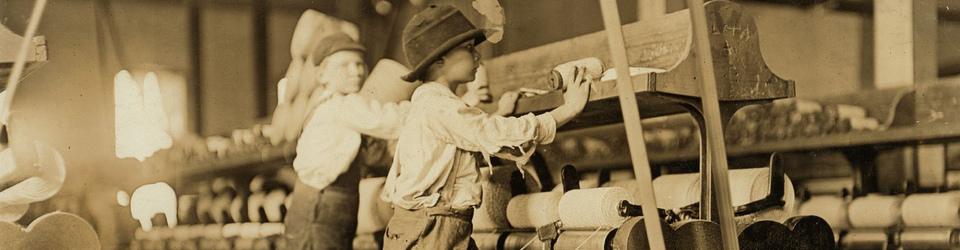
In Great Expectations, Pip is too young to be an apprentice to his sister’s husband, the blacksmith, so he completes random jobs to make money, none of which he ever sees. This money is assumed to be used to help contribute the household. When Pip is told he is expected to go to Miss Havisham’s house to play with her daughter Estella, Pip’s sister sends the boy with hopes that the rich matronly lady will pay Pip for his service, thus extending his fortune for the household. Pip is too young to be an apprentice, yet is expected to work odd jobs to help with the family’s income. This reminded me of the poem The Chimney Sweeper by William Blake where the child is sooty and broken spirited from laboring at such a young age. These young children shouldn’t be forced to work under such circumstances, and although Pip is only expected to play with Miss Havisham’s daughter, he undergoes beratement and humiliation, all for his sister’s hope that he will be paid.

Relationships Between Social Classes

Evidently, the situation of a lower class orphan boy having feelings for an upper class female occurs in both Wuthering Heights by Emily Bronte and Great Expectations by Charles Dickens. Notably, Heathcliff and Catherine develop a certain connection over the course of the novel that was only able to really be possible when they were younger; at a young age, they were unaware of their different social standing and were able to play around together. However, after Catherine comes back from Thrushcross Grange, she becomes aware of their difference, and the possibility of her and Heathcliff ever getting together diminishes greatly. Importantly, she admits this fact when she tells Nelly that she would consider marrying Heathcliff, if Hindley didn’t cast him to be so low. Hence, because of their initial difference in class, they could never make it work. Comparatively, Pip in Great Expectations shows signs of having interest in Estella, with him calling her pretty and saying that even though she was rude to him, he could still see himself wanting to see her again at some point in the future. Heathcliff and Catherine were able to play around together because they were young, innocent, and unaware of their difference in standing. In contrast, Pip and Estella can’t get through a game of cards without Estella’s judgement and insults towards Pip. Specifically she mentions, “He calls the Knaves Jacks, this boy!… and what course hands he has! And what thick boots!” Thus, social class gets in the way of Catherine and Heathcliff’s development of a relationship, and Pip and Estella’s development of even a friendship, as well.

Orphans in Victorian Literature

While reading the first several chapters of Charles Dickens’ Great Expectations, I noticed a handful of connections to Emily Bronte’s Wuthering Heights, but the one I’m most interested in so far is between the characters Pip of Great Expectations and Heathcliff in Wuthering Heights.

The two of them seem similar so far as they were both orphans, although Pip gets to live with his sister and Heathcliff was taken in by Mr. Earnshaw who as far as we are aware, is unrelated to him. We also see how they are both pressed by social class. Heathcliff was constantly ridiculed because of his skin color, hair color and treated as a member of the lower class while Pip and his family are also members of the lower class.

In both novels, the reader sees how aware these characters are of their standing and how they make an effort to change this. In Wuthering Heights after Heathcliff overhears Catherine say that it would degrade her if she married him, he runs away and is gone for three years. During this time he underwent change and returns almost as a different person as Nelly doesn’t even recognize him when he returns. It is never explained where Heathcliff was, what he was doing, how he made money, etc. However with Great Expectations, so far we are seeing the beginning of what seems to be Pip’s efforts toward rising in his social standing. In the later chapters of today’s assigned reading we see Pip’s awareness to his social class after his meeting with Miss Havisham and Estella. When he returns from his time there, he confesses to Joe that he wished he was not common. He also lists things he wished he did not have to face such as “I wish you hadn’t taught me to call Knaves at cards, Jacks; and I wish my boots weren’t thick nor my hands so coarse”. In Chapter 10 we then see Pip begin his efforts toward becoming uncommon by seeking the help of Biddy to teach him things.

I’m interested in seeing how Pip and Heathcliff compare as we continue reading Great Expectations.

Also, I’m beginning to wonder about the usage of orphans in Victorian literature. In high school I remember reading Silas Marner and A Tale of Two Cities and there were orphans in those novels. Although I haven’t read them yet, I believe Jane Eyre and Oliver Twist are also both about orphans? I wonder why this was such a popular thing to write about at the time and what this says about Victorian England historically.

Polyptoton in Tennyson’s “In Memoriam”

According to Erik Gray in his essay, “Polyptoton in In Memoriam: Evolution, Speculation, Elegy” Alfred Lord Tennyson’s poem, “In Memoriam,” utilizes an interesting and particular scheme of repetition that is known as “polyptoton.” Gray defines polyptoton as the opposite of rhyme. Rather than featuring word endings that are alike to antecedent word endings within a stanza, polyptoton changes the word ending but leaves the beginning of the word intact. An example of polyptoton would be a couplet wherein one line ends with the word “silent” and the preceding line ends with the word “silence.” Gray claims that more than half of In Memoriam contains polyptoton and concludes that Tennyson’s continual use of polyptoton indicates its necessity to In Memoriam, insofar as that the poem would not be able to produce the same effect in readers without the presence of polyptoton. Moreover, Gray argues that the trope of polyptoton plays multiple roles in Tennyson’s elegy, particularly, it presents and supports the poem’s central philosophical claims and brings the elegy’s consolatory strategies to light. In particular, Gray argues Tennyson’s use of polyptoton serves two primary functions in In Memoriam: the first is to symbolically reflect evolution and the second is to give a new insight into the role of elegies.

 In order to support his claims, Gray first provides background on the trope of polyptoton in the literary canon. Gray argues that it is Virgil’s fifth eclogue that primarily influenced Tennyson’s In Memoriam, as it too depends upon the fundamental belief that death is not an end but merely a change. Gray supposes that this focus on death is echoed by the fact that the words Tennyson typically uses in his polyptotons are “life” and “death.” This focus also serves to bring about Gray’s first proposed role of polyptoton which is to bring about the motif of evolution. Polyptoton, by definition, means a change. Therefore, it can be said that Tennyson’s extensive use of polyptoton causes his work to mirror evolution itself. Gray further argues that In Memoriam presents many images that demonstrate both decline and gradual improvement and that it lends more focus to the latter, as is exemplified by Tennyson’s persistent polyptotons that transform “high” to “higher,” which at first serves to represent decline, then later represents gradual improvement and the celebration of such improvement. In the sections that feature both positive and negative forms of evolution, Gray states that polyptoton is used to demonstrate the transformations occurring within the elegy. 

Additionally, Gray postulates that polyptoton serves a second purpose: speculation. When using the term “speculation,” Gray means to say that Tennyson uses  polyptoton to show “varying ideas about a single theme.” Gray cites poems 30, 78, and 105 in explaining this; he notes that, although all three begin with the identical theme of Christmas, each poem progresses differently because the speaker’s outlook on Christmas changes within each poem. Gray then brings in Peter M. Sack’s theory that “one of the fundamental conventions of elegy is to divide the lament among multiple speakers, fragmenting and multiplying the mourner’s voice.” From this, he concludes that the repetition of Christmas serves as a sort of polyptoton that allows Tennyson to reimagine grief and transfigure it by dispersing it among many speculations of grief that are each supposed in separate reiterations of successive Christmasses. Thus, Gray’s argument overall serves to demonstrate Tennyson’s use of polyptoton towards the end of creating a successful elegy that aims to alleviate the effects of grief by exemplifying a gradual and positive evolution out of grief, as well as a speculative endeavor to fragment grief and thereby reimagine it such that the burden of loss can be leavened. 

The Life and Ideologies of Thomas Malthus

Thomas Malthus was an influential English economist who began his career as a demographer, studying the ebbs and flows of the English population. Eventually, Malthus entered the field of economics in opposition to Adam Smith, another economist who developed the idea of the “invisible hand” and hugely supported the free market system. Smith is commonly considered the “Father of Capitalism”, and his views were incredibly popular, most likely due to their portrayal of economics in a predominantly optimistic light. The reactionary ideas of Malthus and other more pessimistic economists were not nearly as well received by the Victorian public. Indeed, Malthus’ views on economics and the world’s population, as expressed in “The Principles of Population,” were extremely dismal. Malthus claimed that population growth was not an “unmitigated blessing” that would lead to further prosperity for all, as many utopian utilitarians believed. Instead, he argued that the population was growing too rapidly, at a geometric rate that far exceeded the arithmetic production rate of the food supply. In order to counteract the issue of overpopulation and lack of food supply, Malthus posited two ways to “check” populations: “primary checks”, which decreased birth rates, and “positive checks”, which increased death rates. Examples of primary checks include moral restraint, late marriages, birth control, and population caps. Positive checks include certain forces, such as famine, war, and disease, and would be encouraged when primary checks proved ineffective. 

Notably, Malthus had a lack of faith that primary checks could work on the impoverished population of Victorian England as they were morally inept and therefore impenetrable to the idea of moral restraints. Here, Malthus’ views begin to align with those of Herbert Spencer’s idea of “survival of the fittest”. Malthus believed that withholding resources like medicine, food, and education from the poor would eliminate them, thereby solving the resources crises. Malthus held that to redistribute money from the cultural elite to the poor, i.e. the socio-economic group that Malthus viewed as “less fit”, would thereby deprive the world of culture. Malthus believed that this would be best for all members of society, even the poor themselves, as he believed that their existence under the poverty line caused both themselves and the members of the upper-class misery. Additionally, many writers have commented upon the manner in which Malthus’ ideas impacted those of Charles Darwin. The author of “Henry George on Thomas Robert Malthus: Abundance vs. Scarcity,” Jim Horner, claims that Darwin “applied the Malthusian struggle between population and subsistence to the entire plant and animal kingdom.” (600)

Malthus did not hesitate to apply his own theories to events that occurred in England during his lifetime. For example, Malthus engaged in an intense debate with another British economist, David Ricardo, over the Corn Laws that increased the grain tariff in England. Malthus, in his Observations on the Corn Laws, considered the pros and cons of the tariff and ultimately decided that they protected the health of England’s agriculture. However, these Corn Laws produced a great deal of unrest in England for many working-class individuals since the Corn Laws primarily supported the landed gentry of England and effectively increased their otherwise dwindling political powers.

Malthus’ own life and bias should be addressed in order to fully understand his ideology. Malthus was born into the landed aristocracy of England, though, it is interesting to note that he was the second son in his family, therefore making him unable to inherit his father’s land. Indeed, some scholars argue that this facet of Malthus’ life spawned his attitude towards the poor and that many of Malthus’ theories were designed to preserve the power of the landed gentry that was itself gained from the socio-economic inequalities of the time.